Blogs

Blog title place here
We understand that every federal employee's situation is unique. Our solutions are designed to fit your specific needs.

Blog title place here
We understand that every federal employee's situation is unique. Our solutions are designed to fit your specific needs.

Blog title place here
We understand that every federal employee's situation is unique. Our solutions are designed to fit your specific needs.
Federal Employee Health Insurance Domestic Partner Rules
Under current OPM rules, an unmarried domestic partner is strictly ineligible for Federal Employees Health Benefits coverage, regardless of how long the couple has lived together or how committed the relationship is. A domestic partner becomes eligible for FEHB only if the relationship qualifies as a legally recognized marriage, including a valid common-law marriage where applicable.
That answer frustrates people because ordinary life doesn't fit neatly into federal benefit definitions. Couples may share a home, finances, medical decisions, and years of family responsibilities, yet FEHB still doesn't treat that partner as an eligible family member. The dangerous assumption is that long-term cohabitation creates federal coverage rights. It doesn't.
The issue also reaches beyond a health insurance enrollment form. If the employee retires or dies, an unmarried partner may face separate gaps involving continued health coverage, survivor income, and estate protection. Treating this as a narrow Open Season question is a costly planning mistake.
The Hard Truth About FEHB Eligibility
Many employees begin with a reasonable belief: if a partner is part of the household, the partner should be able to join the employee's family health plan. FEHB doesn't use that household-based test. The Office of Personnel Management states that a same-sex couple in a civil union or other domestic partnership remains ineligible for FEHB coverage unless the couple is legally married, as explained in OPM's domestic partner insurance guidance.
That means cohabitation, shared bills, joint property, and a state domestic partnership registration don't independently create FEHB eligibility. The length or seriousness of the relationship doesn't change the category OPM applies. A couple can be together for decades and still have a partner who cannot be enrolled under Self Plus One or Self and Family coverage unless the relationship is legally recognized as marriage.
Practical rule: Never submit a domestic partner's information to FEHB as though “dependent” means “person who depends on me.” FEHB eligibility follows OPM's legal family-member definitions, not the financial reality inside your home.
The distinction is easy to miss because federal benefits don't all follow one uniform rule. Some federal programs have recognized domestic partners at particular times or under particular conditions, while FEHB health insurance continues to center eligibility on spouses and dependent children. Employees who rely on general federal benefits articles often blend those separate rules together.
What employees should stop trying
A federal agency's human resources office can't waive the FEHB rule because the couple has compelling circumstances. HR can explain the rule, review documentation, and process an eligible enrollment, but it can't convert an ineligible domestic partnership into a qualifying spouse relationship.
Employees should also stop assuming that private-sector practice predicts federal practice. Employer plans outside FEHB may offer domestic partner coverage, although that coverage can carry tax consequences. For a broader comparison of employer-sponsored options, including California employer health benefits, review the plan's actual eligibility and tax language rather than relying on the label “family coverage.”
A useful starting point is this guide to the Federal Employees Health Benefits Program. It can help separate FEHB enrollment tiers from the legal question that controls who may enter those tiers.
The recommendation is direct: classify the relationship correctly before choosing a plan. If the partner is unmarried and isn't in a valid common-law marriage recognized by the relevant state, treat FEHB coverage as unavailable and begin planning for alternative insurance immediately.
Why Federal Rules Treat Partners Differently
The current rule makes more sense when viewed as a patchwork of federal benefit authorities rather than a single government-wide decision about relationship legitimacy. A foundational milestone arrived with the June 17, 2009 presidential memorandum, which expanded same-sex domestic partner access in selected federal benefit programs. That expansion didn't create a universal domestic partner rule across every federal benefit.
One concrete example was the Federal Long Term Care Insurance Program. Same-sex domestic partners of federal employees and retirees became eligible beginning in July 2010. Later, in November 2015, eligibility extended to opposite-sex partners under 5 CFR 875, as described in this federal benefits policy timeline.
FEHB followed a different path. Even after broader marriage-based eligibility changes associated with the 2013 Supreme Court DOMA ruling, domestic partnerships themselves didn't become equivalent to marriage for FEHB purposes. The program's family-member structure remained tied to spouses and dependent children, so recognition in one benefit program couldn't be automatically imported into health insurance.
The legislative signal
Congress did consider changing the FEHB definition. The Domestic Partnership Benefits and Obligations Act of 2009 proposed allowing a domestic partner to qualify as a family member for FEHB family coverage. That proposal wasn't enacted into current FEHB law.
This history matters for practical planning. The exclusion isn't merely an HR preference or an informal interpretation that an employee can challenge with enough proof of commitment. It reflects the legal structure governing FEHB eligibility. A local domestic partnership registry may have significance under state law or a private employer plan, but it doesn't rewrite the federal statute and regulations that govern FEHB.
The same history explains why employees hear apparently contradictory statements. A federal program may recognize a partner for a specific benefit, while FEHB doesn't. A benefits announcement about marriage may expand spousal eligibility without creating domestic partner eligibility. Those statements can all be accurate because they apply to different programs.
The sound approach is to identify the exact benefit first, then consult the authority for that benefit. Don't use eligibility for long-term care insurance, life insurance, or a private employer plan as evidence that the same partner qualifies for FEHB. Federal recognition developed in stages, and the program-specific distinction still controls.
Navigating Common Law Marriage Exceptions
Common-law marriage is the narrow exception that causes the most confusion. It isn't another name for domestic partnership, and it doesn't arise automatically because two people have lived together for a long time. OPM can recognize a common-law marriage when the marriage is valid under the law of a state that recognizes it.
That makes the first question geographic and legal, not emotional: Does the state whose law governs the relationship recognize this common-law marriage? If the answer is no, years of cohabitation won't supply the missing legal status. If the answer may be yes, the couple still has to prove that they formed a marriage under that state's requirements.
A disciplined verification sequence
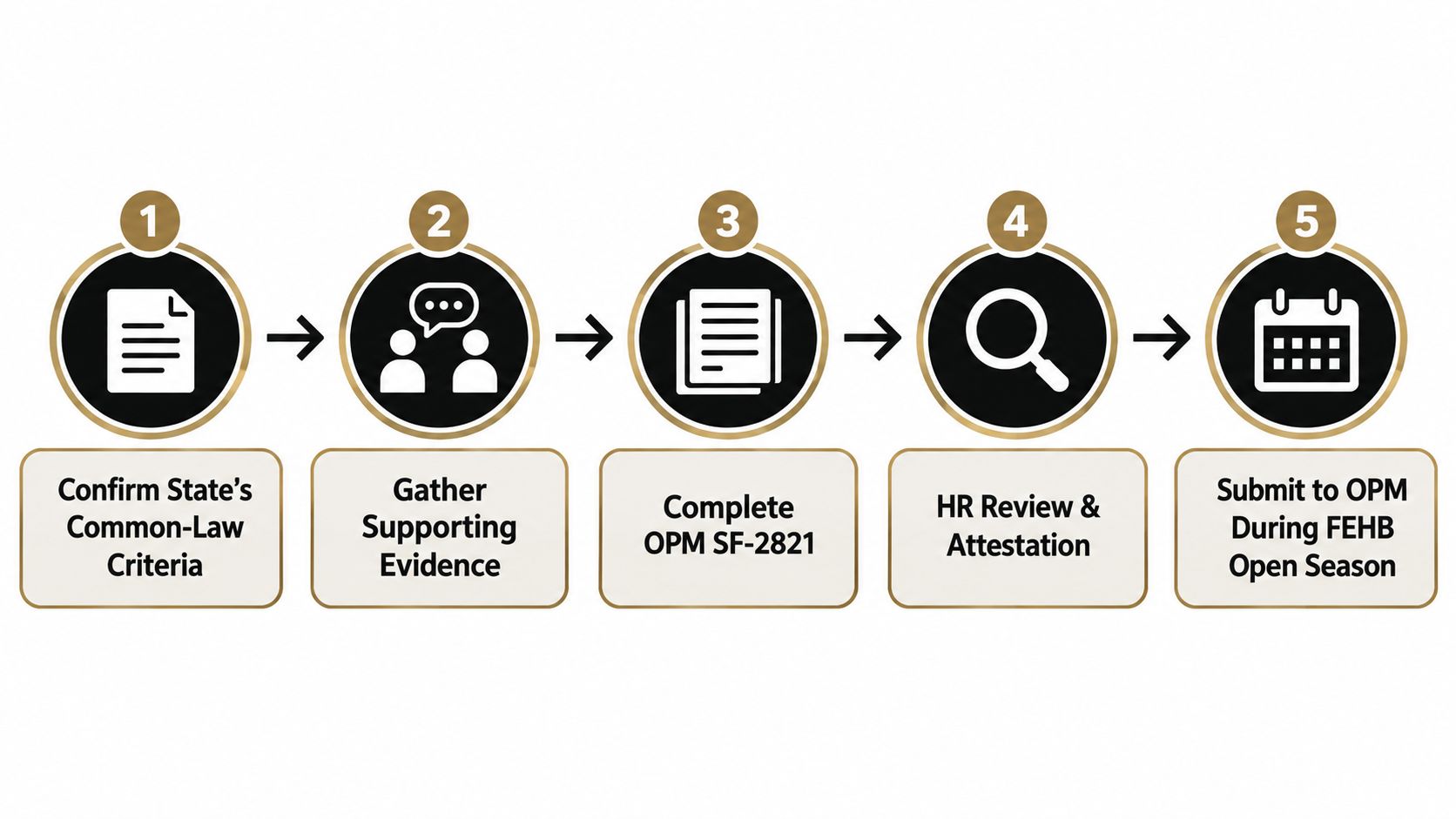
Start with the state statute and the facts of the relationship. Don't begin with an FEHB form and hope the form itself will establish eligibility.
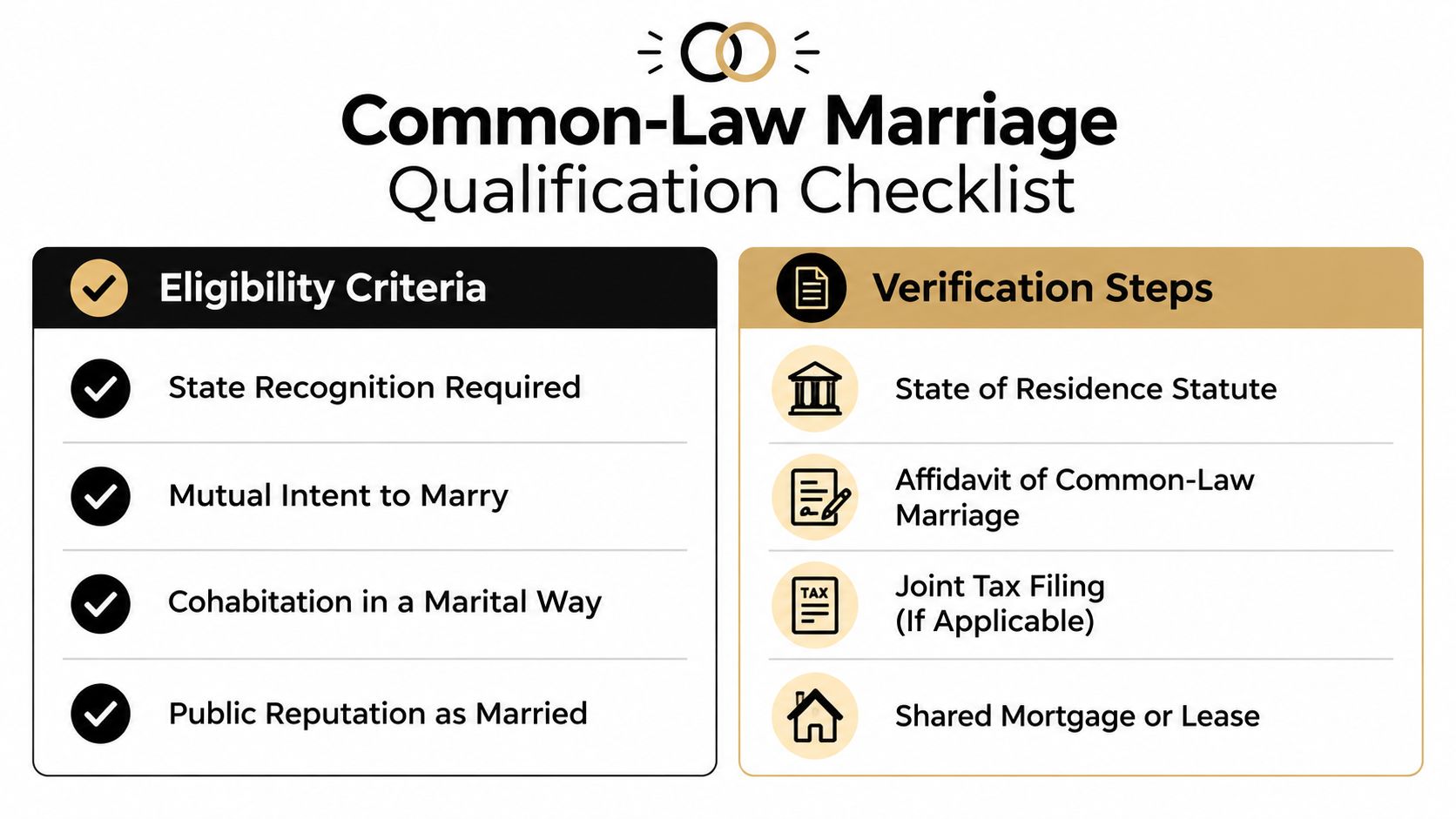
Confirm state recognition. Determine which state's law applies and whether that state recognizes common-law marriage. State rules differ, and a domestic partnership registration isn't automatically a common-law marriage.
Test the legal elements. Review whether the couple demonstrated the elements required by that state, such as mutual intent to be married and conduct consistent with marriage. Merely describing each other as partners may not establish the legal relationship.
Build an evidence file. Gather documents that support the legal conclusion. Depending on the state's rules and the agency's review, relevant evidence may include joint tax filings, an affidavit, a shared mortgage or lease, and records showing the couple held themselves out as married.
Ask HR what it needs. Present the question as a request for eligibility verification, not as a demand to enroll a domestic partner. The agency's HR office will determine what documentation it can accept and whether the evidence satisfies the applicable requirements.
Submit during the proper enrollment window or event. Even a valid marriage doesn't mean an employee can make any election at any time. Follow the applicable FEHB Open Season or qualifying life event process and retain copies of every submission.
The key distinction is between proof of a marriage and proof of a partnership. Joint finances may support a common-law marriage inquiry, but they don't independently make an ordinary domestic partnership eligible.
Don't rely on online checklists that promise a fixed cohabitation threshold. The controlling issue is whether the relationship satisfies the law of a recognizing state and whether the couple can document that status to OPM's standards. A benefits professional can help organize the file, but no advisor can create a common-law marriage where state law doesn't recognize one.
If HR rejects the evidence, ask for the decision and the reason in writing. That record can clarify whether the problem is missing documentation, the wrong state's law, or the underlying relationship status.
The Tax Reality of Imputed Income
Employees who can't use FEHB may look to a private employer plan, a partner's employer plan, or another group arrangement. That can solve the insurance access problem, but it may create a tax problem. Under IRS guidance, when an employer pays for coverage for a domestic partner who isn't the employee's tax dependent under IRC section 152, the fair market value of the employer-paid coverage is generally treated as imputed income.
The employer adds that value to wages, and the amount is subject to income tax withholding and employment taxes, as explained in this IRS ruling on domestic partner health coverage. The employee may therefore bear two costs: the employee's required premium contribution and the tax associated with the employer-paid portion attributed to the nondependent partner.
Compare the relationship categories
| Relationship Status | Premium Tax Treatment | Impact on Employee W-2 |
|---|---|---|
| Legally recognized spouse | Employer-paid health coverage generally receives the tax treatment available to spouse coverage. | The spouse coverage generally isn't added to taxable wages as imputed income. |
| Domestic partner who qualifies as a tax dependent | The dependent relationship may avoid the imputed-income treatment described in the IRS guidance. | The coverage generally isn't treated in the same way as coverage for a nondependent partner. |
| Domestic partner who isn't a tax dependent | The fair market value of the employer-paid partner coverage is generally included in taxable wages and subjected to withholding and employment taxes. | The employee's W-2 compensation reflects the imputed value, increasing the taxable compensation base. |
The financial comparison should use the plan's actual premium allocation and the employer's valuation of the coverage. Don't assume the payroll deduction tells you the full cost. Ask payroll how it calculates imputed income, when it appears on the W-2, and whether the partner may meet the tax-dependent test.
This is one reason private coverage needs an after-tax comparison, not just a premium comparison. A plan that looks affordable on the enrollment screen may deliver less value once withholding and employment taxes are included. Get the calculation from payroll or a tax professional before you treat employer-sponsored domestic partner coverage as the default solution.
Retirement and Survivor Benefit Gaps
The FEHB problem is immediate, but the retirement exposure can be larger. An unmarried partner may depend on the federal employee's income and health plan while lacking the legal status needed to receive the protections that married spouses can access through federal benefits. The household can function like a family every day while the federal benefit system treats the partner as outside the eligible family structure.
The first gap is health coverage after death. If the partner isn't an eligible FEHB family member during the employee's life, the partner doesn't acquire continued FEHB coverage because the employee dies. The surviving partner must have another coverage strategy, and that strategy should be built before retirement, not during a medical or financial crisis.
Survivor income needs separate funding
A FERS survivor annuity is a spouse-based election. An unmarried domestic partner can't receive that survivor annuity merely because the couple shared a home or finances. That creates a direct income-replacement gap that private assets or insurance may need to address.
FEGLI also requires careful review. Employees shouldn't assume that naming a partner in an estate document, beneficiary designation, or household record produces the same result as the protections attached to marital status. Review beneficiary designations, ownership, and estate documents with professionals who understand federal benefits and state law.
Use this guide to federal employee survivor benefits as a starting point, then map each benefit to the partner's actual legal rights. The goal isn't to treat every benefit as identical. The goal is to identify where federal coverage ends and private planning must begin.
The real question isn't “Can my partner get on my plan?” It's “What happens to my partner's healthcare and income if I retire, become disabled, or die?”
Build a replacement plan
A serious gap analysis should examine:
- Health insurance: Identify the partner's current coverage, eligibility for employer or marketplace coverage, and the consequences of losing the employee's plan.
- Income replacement: Estimate the household income the partner would need if the employee dies, then compare that need with existing assets and life insurance.
- Liquidity: Confirm that the partner could access funds quickly, especially if estate administration delays other assets.
- Legal control: Review beneficiary designations, wills, trusts, powers of attorney, and property ownership under the applicable state law.
- Retirement timing: Revisit the plan before the employee separates, because retirement decisions can make coverage and survivor gaps harder to correct.
Private life insurance may replace some of the income protection an unmarried partner can't receive through a FERS survivor annuity. It won't replicate every federal benefit, but it can provide a designated source of funds. The policy should be coordinated with the broader estate plan rather than purchased as an isolated fix.
Strategic Planning and Verification Steps
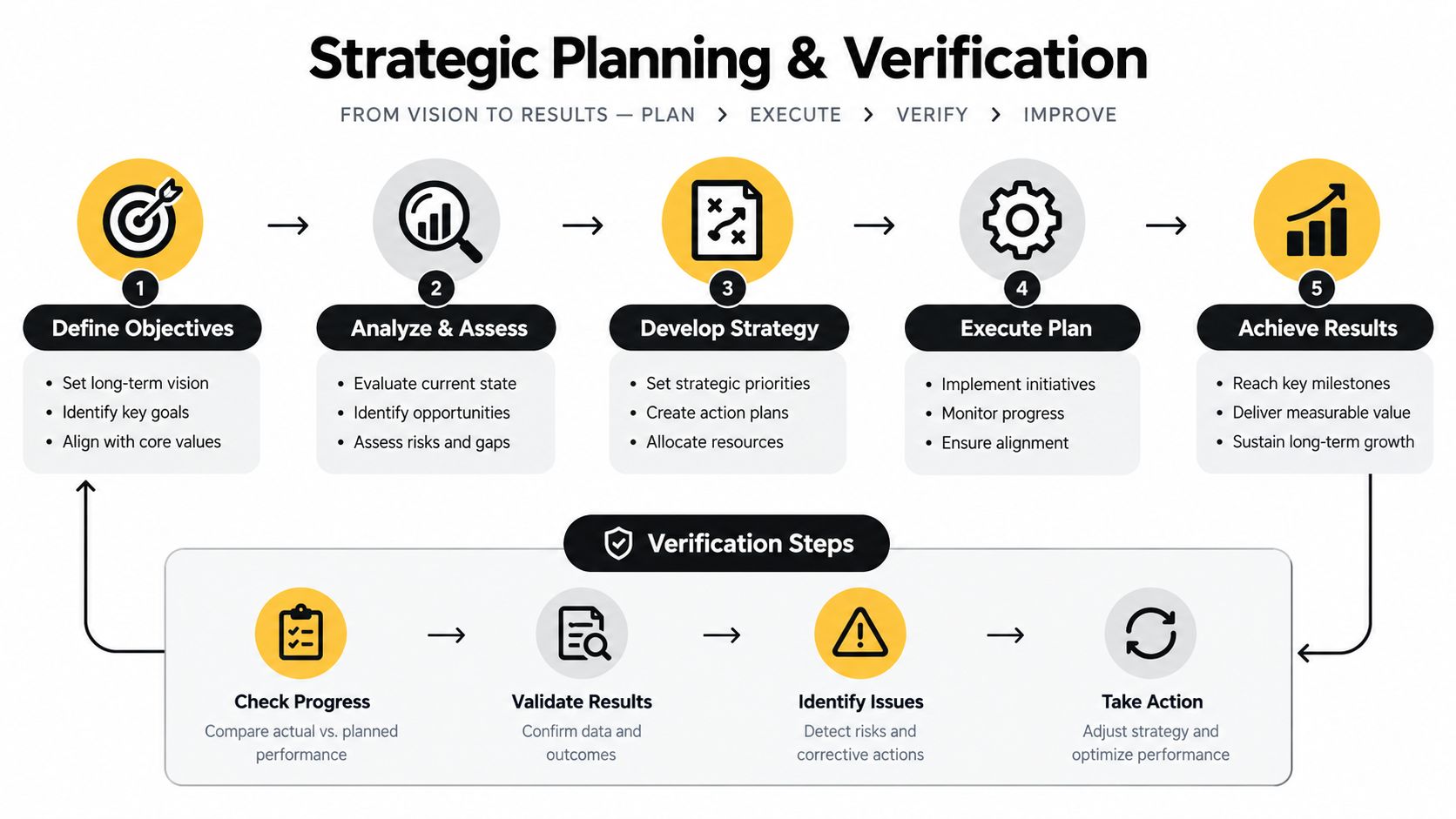
Start with a written eligibility determination. Put the partner's relationship status into one of three working categories: legally married, potentially valid common-law married, or unmarried domestic partner. That classification prevents the most common error, which is treating evidence of commitment as evidence of FEHB eligibility.
Then create a household benefits inventory. List the employee's FEHB enrollment, the partner's current insurance, employer coverage options, tax-dependent status, life insurance, retirement income, beneficiary designations, and estate documents. Mark each item as available, unavailable, uncertain, or requiring professional review.
The employee checklist
Verify the legal relationship. If you believe you have a common-law marriage, identify the governing state law and collect supporting evidence before contacting HR.
Ask targeted HR questions. Request the agency's documentation requirements, the relevant enrollment window, and the written reason for any denial. Don't ask HR to make a domestic partnership fit an FEHB category it doesn't meet.
Price replacement coverage. Compare the partner's employer plan, individual marketplace options, and other lawful coverage sources. Evaluate premiums, deductibles, provider access, and continuity of care rather than selecting based on the monthly premium alone.
Model the tax cost. If another employer plan covers the partner, ask payroll to explain imputed income and obtain tax advice about dependent status.
Replace survivor protection. Review private life insurance, beneficiary designations, trusts, and liquid assets with an advisor and estate-planning attorney.
Recheck before retirement. A plan that works while both partners are employed may fail when one partner retires or loses access to job-based insurance.
The FEHB health benefits election form guide can help employees understand the election process, but a form can't cure an eligibility problem. Submit only information that accurately describes the legal relationship.
The HR checklist
HR professionals should give employees a clear answer without implying that a long relationship might qualify later through additional proof. The useful communication has three parts: explain the FEHB rule, distinguish domestic partnership from common-law marriage, and provide the next lawful planning options.
HR should also protect employees from accidental misrepresentation. A confusing form or casual verbal instruction can lead an employee to certify an inaccurate relationship status. Written guidance, consistent documentation standards, and a referral to tax or retirement specialists can reduce that risk.
Federal Benefits Sherpa offers benefit reviews, retirement planning, and gap analysis reports that can help employees organize the health insurance and survivor-income issues created by an unmarried partnership. Use that type of review alongside official OPM guidance, payroll advice, and qualified legal or tax counsel.
Real World Scenarios and Frequently Asked Questions
A couple has lived together for years but isn't married. Can the partner join FEHB? No. Long-term cohabitation and a domestic partnership registration don't create FEHB eligibility. The only potentially relevant exception is a marriage recognized under applicable law, including a valid common-law marriage where the state recognizes it.
The employee retires. Does retirement change the partner's eligibility? Retirement doesn't turn an unmarried domestic partner into an FEHB family member. The couple should arrange alternative coverage before separation and examine how the employee's retirement timing affects the partner's access to insurance.
The partner loses coverage through a private employer. Is that a qualifying life event for FEHB enrollment? A loss of outside coverage may create an enrollment opportunity for an eligible family member, but it doesn't make an otherwise ineligible domestic partner eligible. Verify the event with the agency's HR office before making assumptions.
Should the couple marry solely to obtain benefits? That's a personal and legal decision, not a benefits formality. Marriage can change eligibility for spouse-based benefits, but it also creates legal and financial consequences. Before making that choice, compare the household's health coverage, taxes, estate plan, property rights, and survivor-income needs with qualified legal and financial professionals.
What should the employee do first? Don't wait for Open Season. Obtain a written relationship-status determination, ask HR for the applicable documentation rules, and build a replacement plan for the partner's health coverage and income protection. Employees nearing retirement should complete this review before locking in retirement elections.
The practical lesson is simple: a shared life isn't the same thing as a qualifying federal benefit relationship. Plan around the rule that exists, document any genuine common-law marriage carefully, and fund the gaps that FEHB and federal survivor programs won't cover.
Federal Benefits Sherpa helps federal employees organize FEHB decisions, retirement choices, and benefits gap analysis, including the exposure created when an unmarried partner can't receive standard federal coverage. Visit Federal Benefits Sherpa to request a benefit review and build a practical plan before Open Season or retirement makes the gap urgent.

Dedicated to helping Federal employees nationwide.
“Sherpa” - Someone who guides others through complex challenges, helping them navigate difficult decisions and achieve their goals, much like a trusted advisor in the business world.
Federal Benefits Sherpa, LLC
12724 Gran Bay Parkway West, Suite 410, Jacksonville, FL 32225
Email: [email protected]
Phone: (833) 753-1825
© 2024 Federalbenefitssherpa. All rights reserved
Federal Benefits Sherpa is an independent organization and is not affiliated with or endorsed by the U.S. government or any federal agency.