Choosing the Right Employee Benefits Advisors
Think of an employee benefits advisor as a strategic partner for your business, someone who helps you design, build, and manage your company's entire benefits package. They're so much more than just an insurance broker. A true advisor is a consultant who helps you attract and keep top talent by creating competitive, smart, and cost-effective programs covering everything from health and retirement to overall wellness.
In a world of complex regulations and ever-shifting market trends, their expertise isn't just helpful—it's essential.
What an Employee Benefits Advisor Really Does

It’s easy to pigeonhole them as the people who just find health insurance plans, but that really misses the big picture. Imagine them as the chief architect of your company’s compensation and well-being strategy. They work at the crossroads where finance, human resources, and risk management all meet, building a benefits structure that supports your employees and your bottom line.
Their real job is to get you past the one-size-fits-all solutions. A great advisor takes a deep dive into your company’s unique DNA. They look at your workforce demographics, your business goals, and your budget to design a benefits program that actually fits.
Core Functions of a Benefits Advisor
The real value of these professionals comes from their comprehensive approach. They aren’t just vendors you call once a year; they’re long-term partners who provide guidance and support all year round. Their work usually covers a few key areas to make sure your benefits program stays competitive, compliant, and genuinely valued by your team.
Strategic Planning: They help you connect the dots between your benefits and your company's big-picture goals, turning perks into a powerful tool for recruiting and retention.
Cost Containment: This is a big one. They analyze market data, negotiate with carriers, and find creative ways to keep a lid on rising healthcare costs without sacrificing the quality of the benefits.
Compliance and Regulation: They are your navigators through the tangled web of laws like the ACA and ERISA. Their job is to keep your business safe from hefty penalties and legal headaches.
Employee Education: A great advisor can translate the confusing jargon of insurance and retirement plans into plain English, helping your employees understand and appreciate the real value of what you're offering them.
An effective benefits strategy is no longer just about health insurance. It’s about building a supportive ecosystem that addresses the physical, mental, and financial well-being of every employee. An advisor is the expert who helps you construct that ecosystem.
At the end of the day, an employee benefits advisor helps turn your benefits spending from a line-item expense into a strategic investment. They make sure the program you offer is not only comprehensive and affordable but also a powerful reflection of your company culture. That kind of strategic thinking is what builds a more engaged, loyal, and productive workforce.
What an Advisor Actually Does to Drive Value for Your Business

A top-notch employee benefits advisor does a lot more than just shop for insurance quotes. They become a genuine strategic partner, weaving together financial analysis, risk management, and HR strategy to strengthen your company from the core.
Think of them as an architect for your benefits program. Instead of handing you a generic blueprint, they start by understanding your company’s unique culture, goals, and workforce. Are you trying to attract niche talent? Reduce turnover? Or simply get costs under control? Their work is tailored to what you actually need to accomplish.
Building Your Benefits Strategy
The starting point is always strategic benefits planning. This isn't a one-and-done task; it's about creating a multi-year roadmap that aligns your benefits directly with your business goals. Your advisor will dig into the demographics of your team—age, family situations, even where they live—to build a package that truly hits home.
For example, a tech startup filled with recent graduates might find huge value in offering student loan repayment plans and top-tier mental health support. A well-established manufacturing firm, on the other hand, might focus on beefing up its 401(k) match and adding long-term care options. It's all about making sure every dollar you spend on benefits is working as hard as it can for your business.
Navigating the Market and Negotiating on Your Behalf
Once the strategy is clear, your advisor puts on their negotiator hat and goes to bat for you in the benefits marketplace. They live and breathe this stuff, using their deep industry connections and market knowledge to find the absolute best value.
A great advisor will:
Run a full market analysis to see how your benefits stack up against the competition.
Negotiate like a pro to lock in the best possible rates and contract terms.
Thoroughly vet every vendor to ensure they’ll provide excellent service to your employees.
This expertise almost always leads to better plans at a lower cost than you could find on your own. It's a huge time-saver and frees up your internal team to focus on what they do best.
Keeping You Compliant and Managing Risk
The laws around employee benefits are a tangled mess. From ERISA to the ACA, it's a full-time job just to keep up. Your advisor acts as your compliance watchdog, making sure every aspect of your program is buttoned up and legal.
An advisor’s role in compliance is proactive, not reactive. They help you anticipate regulatory changes and implement best practices to mitigate risks, protecting your business from costly penalties and legal disputes.
They’ll handle the tedious reporting, keep plan documents current, and offer clear guidance on your fiduciary duties. According to the U.S. Bureau of Labor Statistics, 72% of private industry workers have access to retirement benefits—most of which are complex 401(k) plans governed by strict rules. You can explore more retirement benefit statistics from the BLS. An advisor ensures these plans are managed by the book.
The table below breaks down these core functions and shows how they directly benefit your organization.
Key Services Provided by Employee Benefits Advisors
Service AreaDescriptionBusiness ImpactStrategic PlanningDevelops a multi-year benefits roadmap aligned with company goals and employee demographics.Increases ROI on benefits spend and helps attract/retain the right talent.Market AnalysisBenchmarks current plans against competitors and industry standards.Ensures your benefits package is competitive and attractive to top candidates.Vendor NegotiationLeverages industry relationships to secure favorable rates and contract terms from carriers.Reduces premium costs and improves the quality of available plans.Compliance & Risk ManagementEnsures all benefits programs adhere to federal and state laws (e.g., ACA, ERISA).Avoids costly fines, penalties, and potential legal action.Employee EducationCreates clear communication materials and hosts sessions to help employees understand their benefits.Increases employee appreciation and utilization of the benefits offered.Ongoing SupportProvides year-round assistance with claims issues, administration, and plan management.Frees up HR resources and provides a better employee experience.
Ultimately, these services work together to create a seamless, high-value program that supports both your employees and your bottom line.
Communicating Value Through Education
Finally, what good is a fantastic benefits package if no one understands it? A huge part of an advisor's job is to translate the jargon and complexities of insurance and retirement plans into simple, clear, and engaging information for your team.
They’ll help you develop easy-to-read materials, lead enrollment meetings, and give your employees the tools they need to make smart choices for their families. When your team truly understands and appreciates their benefits, you get the maximum impact from your investment.
How Advisors Tackle Rising Healthcare Costs
https://www.youtube.com/embed/DZtxmjk1aP8
One of the biggest headaches for any business is the ever-increasing cost of healthcare. For most companies, these expenses feel like an out-of-control freight train, gaining speed every year. This is precisely where a sharp employee benefits advisor proves their worth, acting less like a consultant and more like a financial guardian for your company.
Their main job is to wrestle that chaos into submission, bringing a sense of control and predictability back to your benefits budget. They don't do this by just slashing benefits. Instead, they use smart, data-backed strategies to pull in the reins on spending while protecting—and often improving—the quality of care your team receives.
Think of it like building a custom home versus buying a generic one. Instead of just taking whatever the insurance carrier offers off the shelf, an advisor helps you design a plan that truly fits your team. This means digging into your company's actual usage data to stop wasting money on coverage you don't need.
Innovative Plan Design and Network Optimization
A good advisor doesn't just accept your current health plan as a given. They start by questioning everything, analyzing your claims data to pinpoint exactly where your money is going. Are employees running to expensive out-of-network ERs for things that aren't true emergencies? Are you paying for chronic condition management programs that nobody is even using?
Once they have those answers, they can roll out strategies that actually work, such as:
Tiered Networks: These plans gently nudge employees toward high-quality, more affordable doctors and hospitals by offering lower out-of-pocket costs.
Direct Primary Care (DPC): This involves partnering with local DPC clinics to offer unlimited primary care for a simple flat fee, which can dramatically reduce the need for costly specialist and hospital visits down the road.
Targeted Wellness Programs: Instead of generic wellness perks, they can help you launch programs focused on the specific health challenges within your workforce, like diabetes support or smoking cessation, to lower claim costs over the long haul.
These aren't just quick-fix cost-cutting tricks. They're thoughtful adjustments aimed at guiding your team toward better health choices and smarter use of their benefits, which ultimately helps bend the cost curve over time.
A great benefits advisor doesn't just show up once a year with a renewal quote. They get into the weeds of your claims data to understand the "why" behind your spending and build a sustainable, long-term plan to keep it under control.
Mastering Pharmacy Benefit Management
For most employers, the cost of prescription drugs is one of the fastest-growing line items in their budget. A seasoned advisor knows to dive headfirst into your pharmacy benefits, which are typically run by a complex, often opaque, company called a Pharmacy Benefit Manager (PBM).
They'll scrutinize your PBM contract, hunting for hidden fees and demanding transparency on drug rebates. They might also suggest a PBM carve-out, a powerful strategy where you separate your pharmacy benefits from your medical plan. This allows you to contract directly with a more transparent and cost-effective PBM, a move that can single-handedly save companies 15-25% on their total drug spending.
The need for this kind of expertise is more urgent than ever. Recent data shows total U.S. pharmacy spending skyrocketed by 13.6% to $722.5 billion, fueled by price hikes and expensive new specialty drugs. As you can see in the 2025 employee benefits market outlook, this trend isn’t slowing down, making an advisor’s command of PBMs absolutely critical.
At the end of the day, an employee benefits advisor uses data, smart plan design, and aggressive pharmacy management to become your company's best line of defense against healthcare inflation. They turn your benefits program from a reactive annual expense into a strategic, well-managed investment in both your team's well-being and your company's bottom line.
Meeting Modern Workforce Expectations for Benefits
Long gone are the days when a simple health insurance plan was enough to keep your best people around. Today’s workforce sees benefits differently. They're not just a safety net; they're a direct reflection of your company's culture and how much you care about their well-being. This is precisely where an experienced employee benefits advisor becomes indispensable.
An advisor helps you break free from the old one-size-fits-all model, which rarely works for a team spanning multiple generations. Instead, they help you build a flexible benefits package that speaks to everyone, from the new grad paying off student loans to the seasoned pro planning for retirement. It's all about offering real, meaningful choices.
The Rise of Personalization and Holistic Support
If there's one word that defines modern benefits, it's personalization. People expect options that support their entire life—their physical, mental, and financial health. A strategic advisor knows how to weave a rich variety of voluntary and supplemental benefits into your core offerings to meet this demand.
These aren't just minor perks; they're life-changing resources that go far beyond standard medical coverage. Think about offering things like:
Financial Wellness Programs: Real-world help like student loan repayment, financial coaching, or better retirement planning tools.
Mental Health Support: Easy access to therapy, counseling, and mindfulness apps to help your team manage stress and prevent burnout.
Family-Building Options: Modern support that includes fertility treatments, adoption assistance, and generous parental leave policies.
This isn't just a fleeting trend; it’s a fundamental shift in what employees value. The State of Employee Benefits Report showed a significant jump in companies offering supplemental benefits, rising from 41.27% to 43.49%. Younger generations, in particular, are looking for things like expanded reproductive health and gender-affirming care. You can dive deeper into these key insights from the 2025 benefits report to see what's on the horizon.
Creating a Benefits Marketplace
A good advisor can help you transform your rigid annual plan into what feels more like a benefits marketplace. Imagine giving your employees a set budget or credits and letting them shop for the perks that actually matter to them. This approach hands the control back to your team and ensures the money you're spending on benefits is truly valued.
By offering a diverse menu of options, you communicate that you see and value each employee as an individual. This transforms benefits from a static expense into a powerful, ongoing tool for recruitment, engagement, and retention.
This isn't just about keeping people happy; it’s a serious competitive advantage. When your benefits package is a true reflection of your company culture and talent strategy, it becomes a powerful magnet for top performers. An employee benefits advisor is the architect who helps you build it.
How to Select the Right Benefits Advisor
Choosing the right employee benefits advisor isn't just another vendor selection. It’s more like hiring a key strategic partner. This single decision has a ripple effect across your company, touching everything from your financial health and employee morale to your power to attract top-tier talent. It's a choice that demands you look past the price tag to find a true partner who's invested in your long-term vision.
Think about it like this: you wouldn't hire a new CFO based on who asked for the lowest salary, right? You’d look for deep experience, a good cultural fit, and a proven track record of success. The same exact logic applies here. The right advisor sees their role as an investment in your success, offering guidance that delivers value far beyond what their fee schedule might suggest.
Evaluate Industry Experience And Specialization
First things first, dig into a potential advisor's background. You're looking for experience with companies just like yours—similar in size, industry, and maybe even growth stage. A firm that spends all its time with large manufacturing clients probably won't get the unique challenges and opportunities of a 50-person tech startup.
An advisor with deep expertise in your specific sector already knows the landscape. They understand the common compliance headaches you'll face and, just as importantly, they know what kind of benefits packages actually attract the candidates you're trying to hire. This specialized knowledge is a game-changer, allowing them to benchmark your offerings against direct competitors so your plan isn't just adequate, but truly compelling.
Choosing an advisor is a foundational business decision that shapes your ability to attract, retain, and support your team. Focus on finding a long-term partner whose expertise, technology, and service philosophy align with your company's vision for growth and employee well-being.
Scrutinize Their Technological Capabilities
Let's be honest, technology runs everything these days, and benefits management is no exception. A modern advisor absolutely must provide a robust benefits administration platform. This isn't just a nice-to-have; it's a critical tool that simplifies enrollment for your people and drastically cuts down on the administrative headaches for your HR team. The tech should be intuitive, making it genuinely easy for employees to see their options and make smart choices.
But it’s not just about the platform. Ask how they actually use data. The best employee benefits advisors are digging into claims data to spot cost-saving opportunities and suggest wellness initiatives that can make a real difference. This data-driven approach turns your benefits program from a static line item on the budget into a dynamic tool for improving employee health and getting a handle on long-term costs.
This infographic lays out the simple but crucial decision modern employers are up against when building a benefits package.
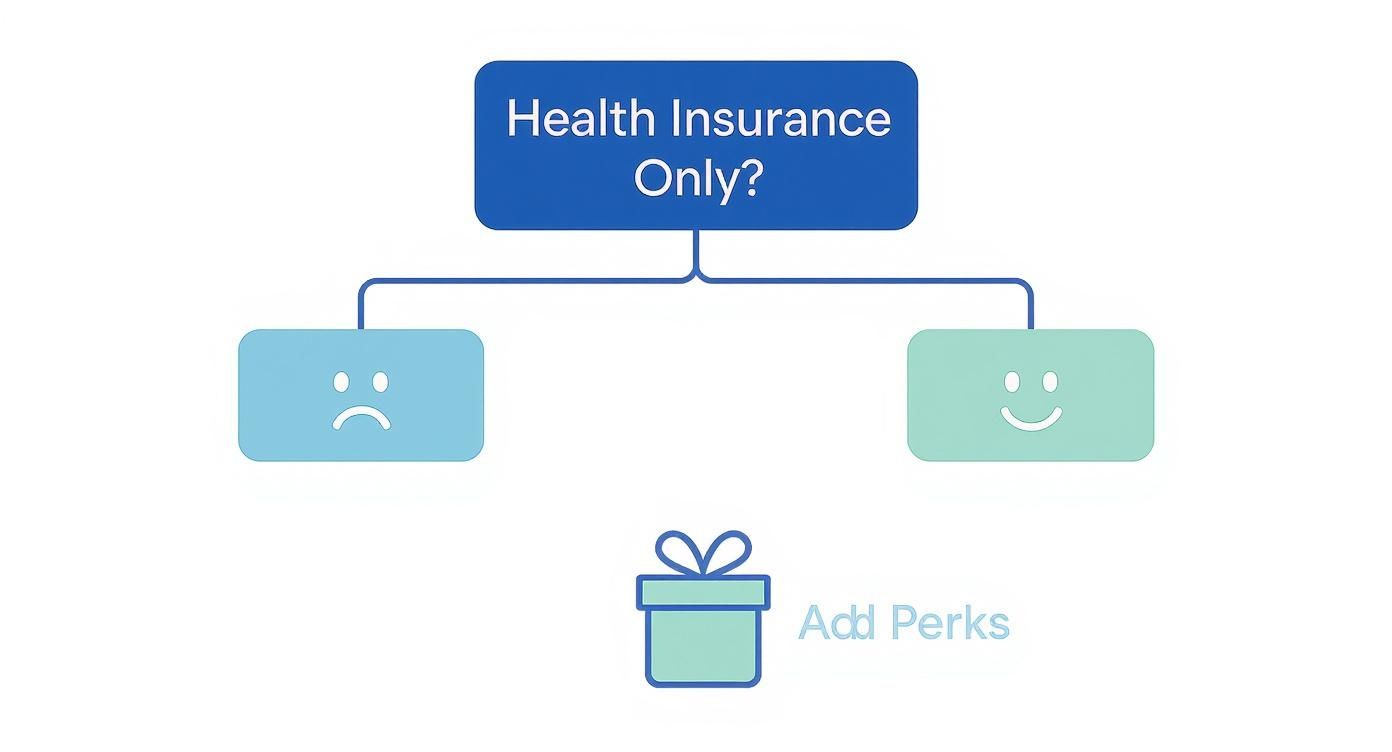
As the visual makes clear, just offering a health plan isn't enough to stay competitive anymore. A modern benefits strategy has to include a much more diverse and appealing set of perks.
Key Questions For Potential Advisors
To get this right, you have to ask the right questions. Don't be shy about digging deep. The following checklist can serve as your guide for vetting potential partners, ensuring you cover all the critical bases before making a final decision.
Advisor Evaluation Checklist
Evaluation AreaKey Questions to AskWhat to Look ForIndustry ExpertiseCan you share case studies from companies our size and in our industry? How do you stay current on industry-specific trends?Proven success stories with relatable clients. They should "speak your language" and understand your unique challenges without needing a primer.Service & SupportWho will be our day-to-day contact? What’s your process for employee communication during open enrollment?A dedicated, responsive point of contact. Look for a clear, proactive communication plan, not just a reactive help desk.Technology PlatformCan we see a demo of your benefits administration platform? How does your tech integrate with our existing HRIS or payroll systems?An intuitive, user-friendly interface for both admins and employees. Seamless integration capabilities are a must to avoid manual data entry.Compliance & FiduciaryHow do you help us stay compliant with regulations like the ACA and ERISA? Do you have in-house compliance experts?A team of experts who can provide clear guidance. If you have a retirement plan, ask if they can act as a 3(21) or 3(38) fiduciary.Cost & CompensationHow are you compensated? Can we see a full breakdown of all fees, commissions, and any other revenue you receive?100% transparency. Whether it's commissions, a flat fee, or a per-employee-per-month (PEPM) model, there should be no surprises.Measuring SuccessHow will you demonstrate the value and ROI of our benefits program? What KPIs do you track?A data-driven approach. They should be able to define what success looks like and report on it with clear metrics, not just vague promises.
Going through this process helps ensure you're not just picking a vendor, but choosing a genuine partner who is committed to helping you build and manage a benefits strategy that truly works for your company and your team for years to come.
Frequently Asked Questions About Benefits Advisors
It's completely normal to have questions when you're thinking about bringing in an expert to handle your benefits. Even after you see the value they can bring, a few things might still be on your mind. Here are some straightforward answers to the questions we hear most often from business leaders.
Advisor Vs. Broker: What Is The Difference?
People often use "advisor" and "broker" as if they mean the same thing, but there's a real difference in their approach. A traditional insurance broker is often focused on the transaction itself—finding and selling you an insurance policy. Their main relationship is usually with the insurance carriers who pay them a commission.
An employee benefits advisor, on the other hand, is playing the long game with you. They look beyond just one policy renewal to build a complete benefits strategy that actually helps your business meet its goals. Think of them as a consultant who’s in your corner year-round, focusing on everything from controlling costs to keeping your employees happy and your company compliant.
At its core, the distinction is simple: A broker typically facilitates a sale. An advisor builds and manages a comprehensive, multi-year strategy to make your business stronger and better support your people.
How Are Employee Benefits Advisors Paid?
This is a critical question to ask, as the payment model can tell you a lot. The old-school way was for advisors to be paid commissions by the insurance carriers whose products they sold. That model is still out there, but it can create a potential conflict of interest.
Today, many forward-thinking advisors are shifting to more transparent, fee-based arrangements. This could be a flat annual fee, a specific fee for a project, or a set rate per employee per month (PEPM). This structure means their advice is based purely on what's best for you, not on who pays the biggest commission check. Always ask for total transparency on how they get paid.
Can Small Businesses Benefit From An Advisor?
Absolutely. In fact, you could argue that small businesses stand to gain the most from working with a benefits advisor. Without the large, in-house HR teams and deep expertise that big corporations have, small businesses often struggle to make sense of the tangled web of benefits and compliance.
An advisor gives a small business the kind of market clout and specialized knowledge it could never get on its own. They can help you:
Secure better rates by combining the buying power of all their clients.
Stay compliant with tricky regulations like the ACA and ERISA, helping you steer clear of expensive fines.
Create competitive packages that let you attract and keep great talent, even when you're up against bigger companies.
Essentially, an advisor levels the playing field. They can turn your benefits program from a source of stress into a genuine strength that helps your business grow.
At Federal Benefits Sherpa, we know that understanding your federal benefits is the key to a secure retirement. Let our experts walk you through it and build a plan that’s right for you.
Schedule your free 15-minute benefit review today at https://www.federalbenefitssherpa.com and take the first step toward a stress-free future.
